Best overall: a correctly sized natural-gas continuous flow system for a home with a suitable existing gas supply. Best for recovering exhaust heat: condensing gas continuous flow; best without mains gas: LPG continuous flow. This 2026 guide compares the best continuous flow hot water systems by installation type, including electric instantaneous units for isolated outlets and compatible gas boosters for solar hot water.
- The best continuous flow hot water systems match simultaneous demand, winter inlet temperatures and the available energy supply.
- Choose condensing gas continuous flow when the installation can accommodate its flue and condensate requirements.
- Electric instantaneous hot water suits isolated outlets only after an electrical supply assessment.
- Priority Plus Plumbing provides hot water services for homeowners and businesses in Sutherland Shire and Sydney.
Why this matters
A continuous flow heater heats water as it passes through the appliance rather than keeping a tank of water hot. It does not run out of stored hot water, but its heating capacity still limits how much hot water you can use simultaneously.
Choose the installation before choosing the badge. A heater that cannot meet your shower demand, fit a compliant location or operate on your available supply is the wrong purchase.
For local installation advice, Priority Plus Plumbing provides hot water services across Sutherland Shire and Sydney. The shortlist below compares system configurations, not unsupported claims that one manufacturer's entire range beats another.
What makes the best continuous flow hot water systems?
Use these criteria to assess a 2026 replacement quote before comparing model names:
- Simultaneous hot water demand: Size for the outlets you actually use together, not simply the number of bathrooms on the floor plan.
- Winter temperature rise: Check the manufacturer's output at the difference between incoming cold water and the required hot water temperature.
- Energy supply: Confirm gas type, meter and pipe capacity, or the electrical supply required by an instantaneous electric unit.
- Compliant location: Assess ventilation, flue terminal clearances, service access and proximity to frequently used outlets.
- Installation scope: Include temperature control, drainage where required and changes to existing pipework or wiring.
- Repair access: Check local servicing arrangements, replacement parts and the written warranty terms for the exact model.
A high advertised flow rate does not override these checks. Ask the installer to explain the assumptions behind the recommended capacity.
Continuous flow hot water systems at a glance
| System configuration | Best for | Standout feature | Key limitation |
|---|---|---|---|
| Natural-gas continuous flow | Replacing a gas heater where the existing supply is suitable | Heats water on demand without a hot water storage tank | Gas supply and winter output must suit demand |
| Condensing gas continuous flow | Installations prioritising recovery of exhaust heat | Recovers additional heat from combustion gases | Needs suitable condensate disposal and flue arrangements |
| LPG continuous flow | Properties without mains gas that already use LPG | Provides gas-fired instantaneous heating without a mains connection | Depends on LPG supply and suitable regulator capacity |
| Electric instantaneous | An isolated sink or other limited-demand outlet | Heats water near the point of use | Electrical demand restricts suitable applications |
| Solar-compatible gas booster | Existing solar hot water needing backup heating | Adds heat when solar-heated water is below the required temperature | Must accept preheated water and match the solar system |
These are different installation choices, not interchangeable appliances. Compare individual models only after identifying the configuration your property needs.
1. Natural-gas continuous flow: best for an existing gas installation
A natural-gas continuous flow heater heats incoming water when a hot tap opens. It is the default option to assess when you already have a gas hot water installation and want another instantaneous system.
An existing gas connection does not prove that the supply can support the replacement. The installer must check the appliance's gas demand against the meter, regulator and pipework, including other gas appliances operating at the same time.
Natural-gas continuous flow pros:
- No hot water storage cylinder to accommodate.
- Heating occurs when hot water is drawn.
- Models offer different output capacities for different household demands.
Natural-gas continuous flow cons:
- Simultaneous use can exceed the heater's output.
- Gas pipework or the proposed appliance location can require changes.
Best for: A household replacing gas hot water where the supply and installation location are suitable.
Verdict: Buy after the installer confirms winter output and gas capacity. Do not choose a larger unit merely because it has a higher headline flow rate; the supporting infrastructure must match it.
2. Condensing gas continuous flow: best for exhaust heat recovery
A condensing continuous flow heater recovers additional heat from combustion gases. Its heat exchanger cools those gases sufficiently for water vapour to condense, creating condensate that needs appropriate disposal.
For a 2026 shortlist, compare the exact appliance's published efficiency information and installation instructions. The word condensing does not establish a specific household saving or make a difficult installation suitable.
Condensing gas continuous flow pros:
- Recovers heat that a non-condensing design releases through its exhaust.
- Provides on-demand heating without a hot water storage cylinder.
- Offers an alternative when combustion efficiency is a priority.
Condensing gas continuous flow cons:
- Condensate disposal adds an installation requirement.
- Flue materials, routing and clearances must suit the particular appliance.
Best for: A gas-connected property where exhaust heat recovery is a priority and the site supports the required installation.
Verdict: Buy when the installer confirms compliant condensate disposal and flue arrangements. Hold if the proposal leaves either requirement unresolved.
3. LPG continuous flow: best for properties without mains gas
An LPG continuous flow heater uses liquefied petroleum gas rather than natural gas. It provides instantaneous hot water where mains gas is unavailable and an appropriate LPG installation is practical.
Select an appliance approved for the supplied gas type. Never assume that a natural-gas model can simply be connected to LPG; any permitted conversion depends on the manufacturer and must be completed by a licensed gasfitter.
LPG continuous flow pros:
- Does not require a mains natural-gas connection.
- Heats water on demand without a hot water storage tank.
- Can suit a property that already has an appropriate LPG installation.
LPG continuous flow cons:
- Hot water depends on maintaining the LPG supply.
- Regulators, cylinders and pipework must support the connected gas load.
Best for: A property without mains gas where LPG supply and appliance servicing are practical.
Verdict: Buy after the gasfitter checks the complete LPG supply arrangement. Hold if cylinder access, regulator capacity or other connected appliances have not been considered.
4. Electric instantaneous: best for an isolated outlet
An electric instantaneous heater uses electrical elements to heat water as it flows through the unit. A suitably selected point-of-use unit can serve an isolated outlet without a long hot water pipe run from a central heater.
Do not confuse a small sink unit with a whole-house hot water replacement. Heating shower flows requires substantially more electrical power than heating a limited flow at a handwashing outlet, and some applications require three-phase power.
Electric instantaneous pros:
- Does not require a gas connection or combustion flue.
- Can place water heating close to the outlet it serves.
- Avoids maintaining a hot water storage tank for that outlet.
Electric instantaneous cons:
- Available electrical capacity can rule out the intended application.
- Output and minimum activation flow must match the tap and intended use.
Best for: An isolated sink or limited-demand outlet with an electrical supply suitable for the selected appliance.
Verdict: Buy for a verified point-of-use application; hold for whole-house use until an electrician assesses capacity. A compact cabinet does not mean a simple electrical installation.
5. Solar-compatible gas booster: best for existing solar hot water
A solar-compatible continuous flow gas booster adds heat when water from a solar hot water system is not warm enough. It forms part of that system rather than replacing the solar collector and storage arrangement.
Compatibility is essential. The booster must accept preheated incoming water and work with the solar system's controls, permitted temperatures and plumbing layout.
Solar-compatible gas booster pros:
- Supplies backup heating when solar heat is insufficient.
- Adds heat to water already warmed by the solar system.
- Retains a compatible solar installation rather than replacing it unnecessarily.
Solar-compatible gas booster cons:
- An ordinary continuous flow heater is not automatically suitable.
- A failed collector, valve or control needs diagnosis beyond replacing the booster.
Best for: An existing solar hot water installation that needs a compatible gas booster replacement.
Verdict: Buy only after compatibility is confirmed. If solar hot water performance has deteriorated, diagnose the complete system before deciding that the booster is responsible.
Check flow, temperature and location before ordering
Ask your installer to record the outlets you expect to use together. Two bathrooms used at different times create a different requirement from simultaneous showers, even in otherwise similar homes.
Then separate heater output from delivery temperature. Under Australian plumbing requirements, heated water delivered to personal hygiene fixtures in ordinary residential installations must not exceed 50 °C. Certain facilities serving vulnerable users have a lower 45 °C limit; the applicable building use and requirements must be confirmed.
These are delivery limits, not instructions to change appliance settings yourself. A temperature-limited appliance and an installation using a separate temperature-control valve require different assessments.
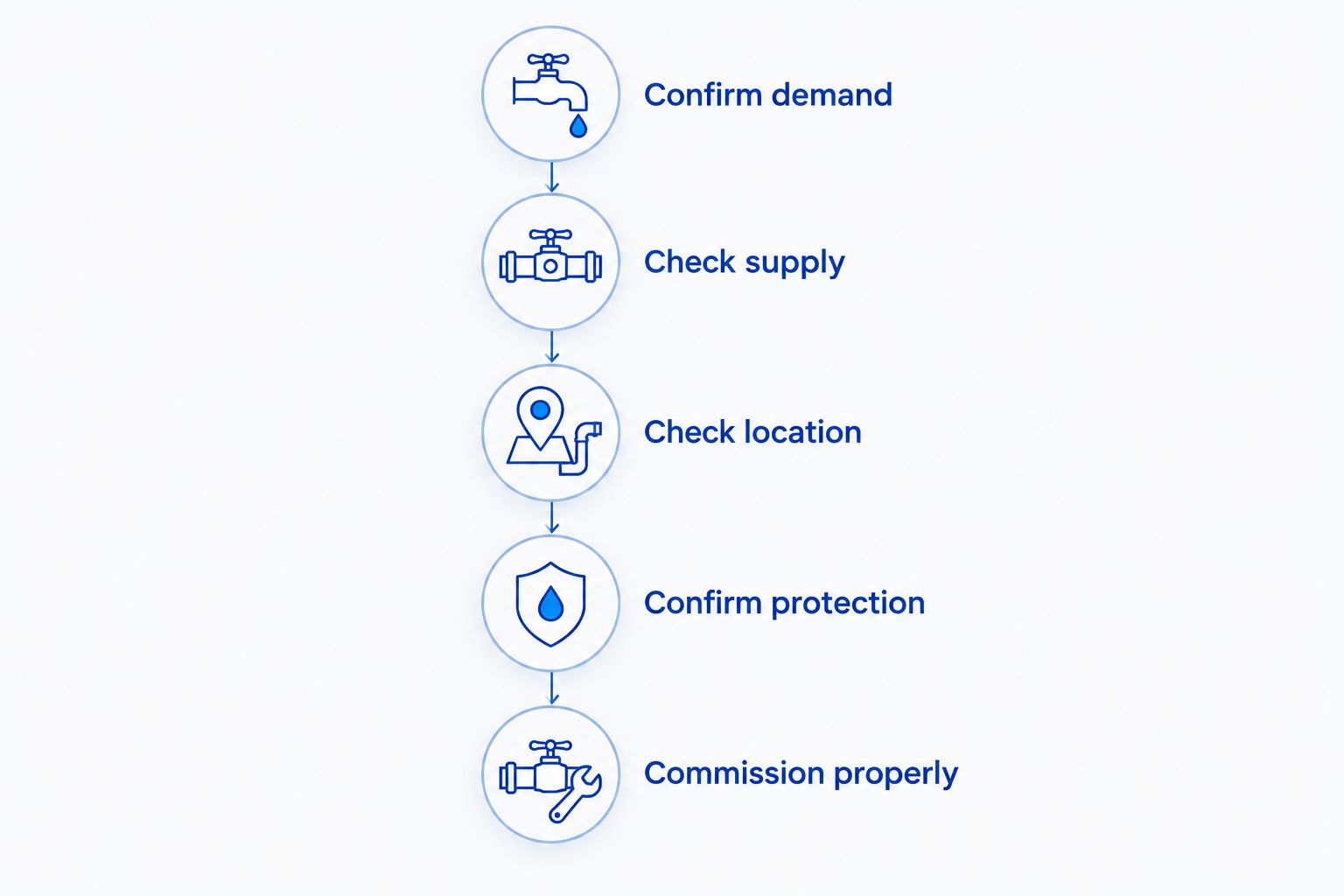
For your 2026 installation discussion, work through this sequence:
- Confirm demand: Identify the hot water outlets used simultaneously.
- Check supply: Assess gas or electricity capacity and incoming water conditions.
- Check location: Confirm clearances, ventilation, drainage and service access.
- Confirm protection: Specify the required temperature-control arrangement.
- Commission properly: Have the installer test operation and explain normal use.
Keep the written scope specific. Priority Plus Plumbing can discuss hot water requirements for residential and commercial properties, but the selected appliance still needs a site-specific assessment.
How these options are ranked
This 2026 guide ranks configurations by their fit for distinct installation needs: an existing natural-gas supply, exhaust heat recovery, no mains gas, an isolated outlet and solar backup heating.
The criteria are usable output, energy supply, installation suitability, temperature protection and service access. This is not a laboratory comparison of individual appliances, and the order does not establish that every natural-gas unit outperforms every condensing or electric unit.
The right configuration comes first; the model comparison comes second. Request the exact model designation and supporting installation details before accepting a recommendation.
Which continuous flow system should you choose?
For an existing gas-connected home, start with a correctly sized natural-gas continuous flow replacement. Compare a condensing alternative if the site accommodates its additional requirements and heat recovery matters to your decision.
Choose LPG for a suitable property without mains gas, electric instantaneous for a verified isolated-outlet application, and a compatible gas booster for existing solar hot water. If none fits your property, reassess the system type rather than forcing a continuous flow installation.
FAQ
What’s the best continuous flow hot water system for my home?
The best continuous flow hot water system matches your simultaneous demand, winter inlet temperature and available energy supply. For an existing gas-connected home, start by assessing a correctly sized natural-gas replacement.
Is condensing continuous flow better than standard gas continuous flow?
Condensing continuous flow recovers additional heat from combustion gases. It also needs suitable condensate disposal and flue arrangements, so compare the exact models and installation requirements.
Can continuous flow hot water run out during a shower?
Continuous flow heaters do not exhaust a stored supply, but they have a maximum heating capacity. Excess simultaneous demand can reduce the hot water flow or temperature available at outlets.
Can I replace gas hot water with electric instantaneous?
Only if the electrical supply and selected appliance can meet the intended demand. Have an electrician assess the installation before treating electric instantaneous as a whole-house replacement.
What temperature should hot water reach bathroom taps?
Australian plumbing requirements generally limit hot water delivered to residential personal hygiene fixtures to 50 °C. Certain facilities require a lower limit, and the installer must confirm the applicable requirements.
Can any continuous flow heater boost solar hot water?
No, a solar booster must be approved for preheated incoming water and compatible with the solar system. Confirm the exact appliance and plumbing arrangement before replacement.
Who can help with an urgent hot water problem in Sutherland Shire?
Priority Plus Plumbing provides 24/7 emergency plumbing and hot water services in Sutherland Shire and Sydney. Explain whether the problem involves no hot water, leaking water or a suspected gas issue when requesting assistance.
One last thing
A larger heater does not shorten the pipe between the heater and your shower. Water already sitting in that pipe still needs to pass through before newly heated water arrives.
For a 2026 replacement, tell the installer whether your complaint is insufficient hot water during simultaneous use or a long wait at one tap. Those are different problems, and increasing heater capacity does not automatically solve both.
Related guides