Best overall: a heat pump where the installation suits it. Best for a straightforward replacement: compact electric storage. Best for limited tank space: instantaneous electric, subject to electrical capacity. This 2026 guide compares the best electric hot water systems for small households; Priority Plus Plumbing provides hot water services across Sutherland Shire and Sydney.
- The best electric hot water systems match household demand, installation space and electrical capacity—not just occupant numbers.
- Heat pump hot water is the default shortlist choice when airflow, location and demand suit the installation.
- Compact electric storage suits straightforward replacements; instantaneous electric requires an electrical capacity check.
- Priority Plus Plumbing provides hot water services for homeowners and businesses in Sutherland Shire and Sydney.
Why this matters
A small household does not automatically need the smallest tank. Back-to-back showers, bath use and the time available for reheating determine whether hot water lasts through your busiest period.
Choose the system around your peak demand, not your quietest day. For a 2026 replacement, assess the existing plumbing, electrical supply and installation position before choosing a technology. A system that fits the household still needs to fit the property.
What makes the best electric hot water systems?
Use these criteria before comparing system types:
- Peak demand: Can the system cover showers and other hot-water use during your busiest period?
- Recovery: Can it restore enough hot water before the next period of demand?
- Electrical suitability: Does your supply support the proposed system without unassessed electrical changes?
- Installation fit: Check dimensions, service access, pipework and any ventilation or drainage requirements.
- Energy use: Compare how the system heats water, not just how much water it stores.
- Serviceability: Keep valves, electrical isolation and service points accessible after installation.
A heat pump transfers heat from surrounding air into stored water. Conventional electric storage and instantaneous electric systems use electrical resistance heating. That difference supports putting a suitable heat pump first for energy-conscious households, but it does not settle every replacement decision.
Electric hot water systems at a glance
These 2026 recommendations rank system types, not individual models. Select a model only after checking its published specifications against the installation.
| System type | Best for | Standout feature | Key limitation |
|---|---|---|---|
| Heat pump | Whole-home use with a suitable installation position | Transfers ambient heat into stored water | Needs suitable airflow, siting and recovery capacity |
| Compact electric storage | Straightforward replacement with modest peak demand | Stores heated water for immediate use | Stored hot water can run out before recovery |
| Instantaneous electric | Homes with little room for a storage tank | Heats water as it flows | Electrical demand and supported flow need assessment |
| Point-of-use storage | An isolated basin away from the main system | Stores hot water near one outlet | Usually unsuitable as the main household supply |
1. Heat pump: best for energy-conscious small households
A heat pump uses electricity to move heat from the air into a storage tank. Unlike a conventional resistance element, it does not generate all its heat directly from electricity. Its suitability depends on the installation environment and the selected model's operating requirements.
Best for: A small household replacing its main hot water system where airflow, location and recovery performance suit a heat pump.
Heat pump pros:
- Uses ambient heat to reduce reliance on direct resistance heating.
- Stores hot water for use during periods of concentrated demand.
- Supplies multiple household outlets through the main hot water pipework.
- Offers a whole-home option without choosing gas heating.
Heat pump cons:
- Compressor and fan operation require attention to noise and placement.
- Airflow and service clearances restrict installation locations.
- Recovery depends on the model, operating conditions and selected mode.
Do not select a heat pump by tank capacity alone. Check recovery information, operating temperature limits and any backup heating arrangements in the manufacturer's documentation. A suitable tank must also restore hot water between your household's demand periods.
Priority Plus Plumbing is a local hot water service option for small households in Sutherland Shire and Sydney. Ask for an installation assessment before settling on a heat pump model.
Verdict: Buy a heat pump when its location and recovery performance match your household. It is the default 2026 shortlist choice, not an automatic fit for every property.
2. Compact electric storage: best for a simple replacement
Compact electric storage heats water inside an insulated tank using an electric element. You draw from that stored supply, and the element reheats replacement cold water. Available hot water therefore depends on both storage capacity and recovery.
Best for: A small household with modest peak demand and an existing installation suited to conventional electric storage.
Compact electric storage pros:
- Stores heated water ready for use.
- Avoids the airflow requirements associated with a heat pump.
- Can suit installations where a comparable storage system already operates.
- Provides a familiar replacement format for existing tank-based plumbing.
Compact electric storage cons:
- Hot water runs out when demand exceeds the usable stored supply and recovery.
- Stored water loses heat over time, even when no tap is running.
- A smaller tank leaves less reserve for guests or changing routines.
Check whether the existing system heats whenever required or only during controlled supply periods. A replacement connected to a restricted heating schedule needs enough stored hot water to bridge those periods. Do not assume a new tank changes the electricity arrangement.
For a 2026 replacement, keep bath use and consecutive showers in the sizing discussion. A household with few occupants can still create a concentrated demand that a small tank cannot cover.
Verdict: Buy compact electric storage when its usable supply and heating schedule cover your peak demand. Do not downsize solely because fewer people live at the property.
3. Instantaneous electric: best where tank space is limited
Instantaneous electric systems heat water as it passes through the unit rather than storing a household supply. This removes the need for a large storage tank. It also places heating demand directly on the electrical supply while hot water flows.
Best for: A space-constrained property where an electrical assessment confirms the required hot-water flow is achievable.
Instantaneous electric pros:
- Removes the need for a large hot-water storage tank.
- Avoids heat loss from maintaining a stored tank of hot water.
- Heats water in response to outlet demand.
Instantaneous electric cons:
- Whole-home heating demand can require electrical supply changes.
- Supported flow depends on incoming water temperature and the required temperature rise.
- Simultaneous outlets need careful assessment against the unit's rated performance.
An instantaneous system is not unlimited hot water at unlimited flow. Check the manufacturer's flow information at the temperature rise your installation requires. A headline flow figure without that context is not enough to size the system.
Arrange the electrical assessment before purchasing. The relevant checks include available supply, circuit requirements and switchboard suitability; a plumber's space assessment does not replace that electrical work.
Verdict: Wait until electrical capacity and required flow are confirmed. Choose instantaneous electric for a verified space-saving installation, not as a presumed plug-in replacement.
4. Point-of-use storage: best for an isolated basin
A point-of-use storage heater serves an outlet close to its installation position. Its role is local hot water, rather than replacing a main household system. That distinction matters when a compact unit looks appealing for a small home.
Best for: An isolated basin with a separate, limited hot-water requirement.
Point-of-use storage pros:
- Places stored hot water close to the outlet it serves.
- Reduces the length of hot pipework between that heater and the basin.
- Separates a local outlet's demand from the main household system.
Point-of-use storage cons:
- Limited stored volume restricts the amount of hot water available.
- Adds another appliance requiring suitable installation and maintenance.
- Does not solve whole-home shower demand merely because it fits a cupboard.
Confirm the heater's intended application, pressure arrangement and compatible fittings before selection. Some point-of-use systems have specific outlet requirements. They are not interchangeable with ordinary whole-home storage systems.
Verdict: Buy point-of-use storage only for a defined local outlet. Skip it as the default main system for a household.
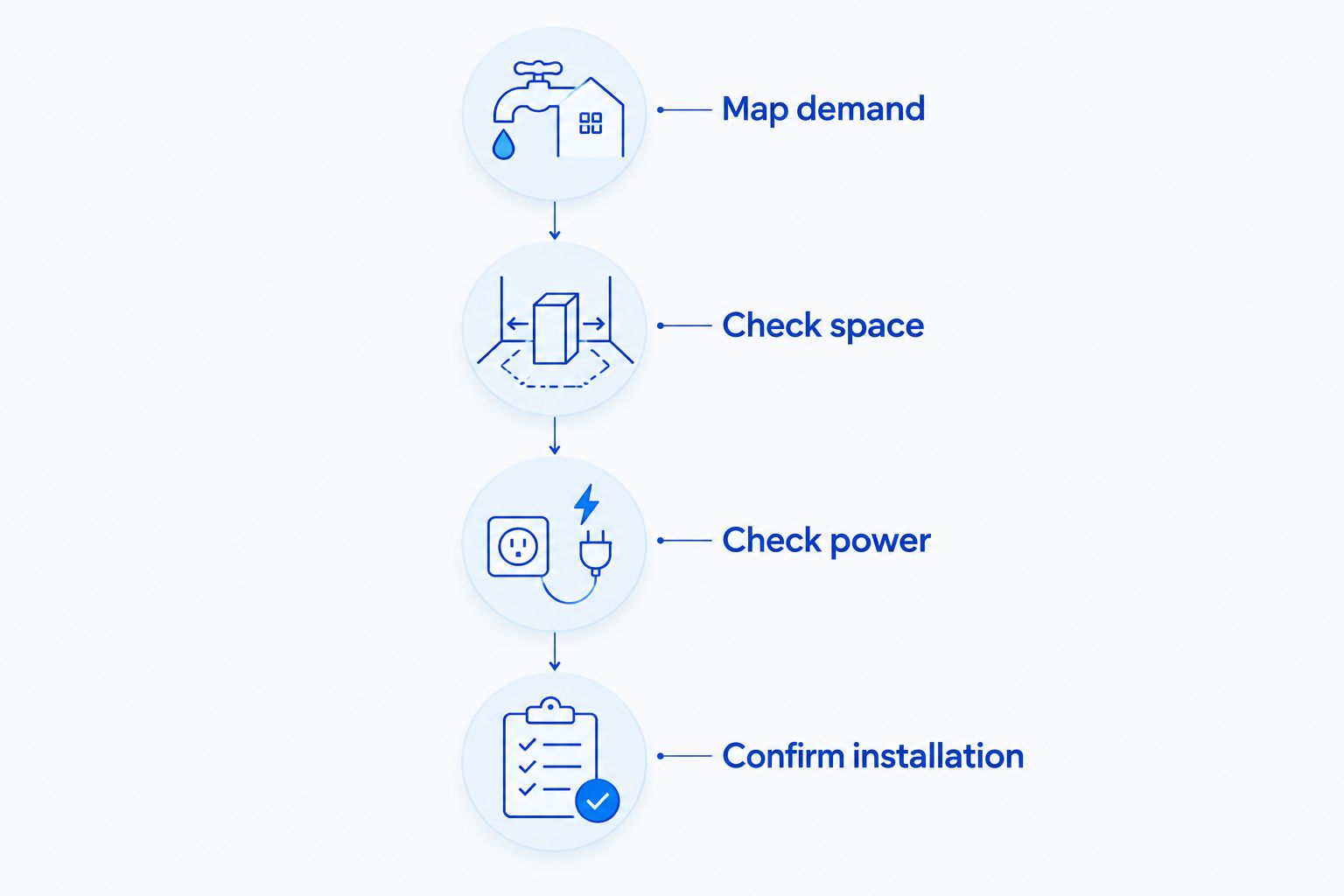
Check these four things before ordering
A useful 2026 shortlist ends with installation checks, not an online purchase. Give the installer a clear picture of how the home uses hot water and where the replacement must go.
Map demand
List showers, baths and other significant hot-water use during the busiest part of the day. Record which activities overlap. Include regular guests rather than sizing only for the minimum daily routine.
Check space
Measure the available installation area and identify service access. For heat pumps, include airflow and noise considerations; for storage systems, check access to valves and required discharge arrangements. A unit fitting through the doorway does not prove the location is suitable.
Check power
Identify the existing system and its electricity arrangement. Have a qualified electrician assess proposed changes, particularly for instantaneous electric heating. Do not alter wiring or assume an existing circuit supports a different system type.
Confirm installation
Ask the installer to confirm the selected model, sizing basis and required plumbing and electrical work. Include removal of the old system, access constraints and commissioning requirements in the discussion. Keep the manufacturer's operating instructions after handover.
These checks separate a suitable system from one that merely appears suitable on a specification sheet. Priority Plus Plumbing provides hot water services for homes and businesses across its Sutherland Shire and Sydney service area.
Arrange a hot water assessment
Discuss household demand, installation space and the work needed for a replacement.
Temperature safety is part of the selection
Storage temperature and bathroom delivery temperature are different. Conventional storage systems generally store water at 60°C or higher for microbial control, while Australian plumbing requirements generally limit delivery to personal-hygiene fixtures in ordinary homes to 50°C. System-specific sanitation arrangements and installation requirements still need professional assessment.
Do not lower a storage thermostat as a shortcut to safer shower temperatures. The installation must manage storage hygiene and scald protection together, using the appropriate temperature-control arrangement.
Leave relief valves, discharge pipes and electrical covers alone. For an active leak or failed hot water system, Priority Plus Plumbing offers 24/7 emergency plumbing; keep clear of wet electrical equipment and arrange professional assistance.
How these system types are ranked
The ranking prioritises whole-home suitability, energy use, peak-demand coverage and installation constraints. Heat pumps lead where the property supports them; compact storage offers a conventional replacement route; instantaneous electric needs electrical verification; point-of-use storage serves a separate local requirement.
This is a selection framework, not a model test or a claim that every heat pump outperforms every storage system. Your final choice needs the selected model's documentation and an assessment of the property.
Which electric hot water system should you choose?
Start your 2026 shortlist with a heat pump, then check whether the installation supports it. Choose compact electric storage when its capacity and heating schedule fit your routine and the replacement position.
If tank space is the main obstacle, investigate instantaneous electric before committing to electrical changes. Reserve point-of-use storage for an isolated outlet, not as a shortcut around whole-home sizing.
FAQ
What’s the best electric hot water system for a small household?
A heat pump is the default shortlist choice where airflow, location and recovery performance suit the property. Compact electric storage remains a practical alternative when its stored supply and heating schedule cover household demand.
Is a heat pump better than ordinary electric storage?
A heat pump uses ambient heat rather than relying entirely on direct resistance heating. The better installation still depends on location, noise considerations, recovery requirements and household demand.
What size hot water tank do two people need?
Occupant numbers alone do not determine the right tank size. Assess consecutive showers, baths, other hot-water use and the time available for reheating before selecting a capacity.
Can instantaneous electric hot water replace a storage tank?
Yes, when the electrical supply, plumbing and required flow support the selected unit. Arrange an electrical assessment before purchasing because an existing storage-heater circuit does not establish suitability.
Can a small under-sink heater supply the whole house?
A point-of-use storage heater is intended for a defined local demand, not automatically for whole-home use. Check its intended application, usable storage and installation requirements before choosing it.
Should I lower the tank temperature to prevent scalding?
Do not lower the storage thermostat as a substitute for appropriate delivery-temperature control. A plumber should assess storage hygiene and scald protection together.
Who can assess a replacement hot water system in Sutherland Shire?
Priority Plus Plumbing provides hot water services for homeowners and businesses in Sutherland Shire and Sydney. Discuss peak demand, installation space and electrical requirements before selecting a replacement.
One last thing
Photograph the existing heater's data plate before requesting a hot water assessment. Send it with pictures of the installation position and accessible pipework. The data plate identifies the existing unit; your shower and bath routine explains what its replacement must deliver.
Related guides
- Best hot water systems for Sydney homes
- Best heat pump hot water systems for Sydney homes
- Best continuous flow hot water systems